23 August 2026 · Bharat Raj · originally published on Compoden
Eighteen Servos and a Gait: Building the Hexapod Robot Kit
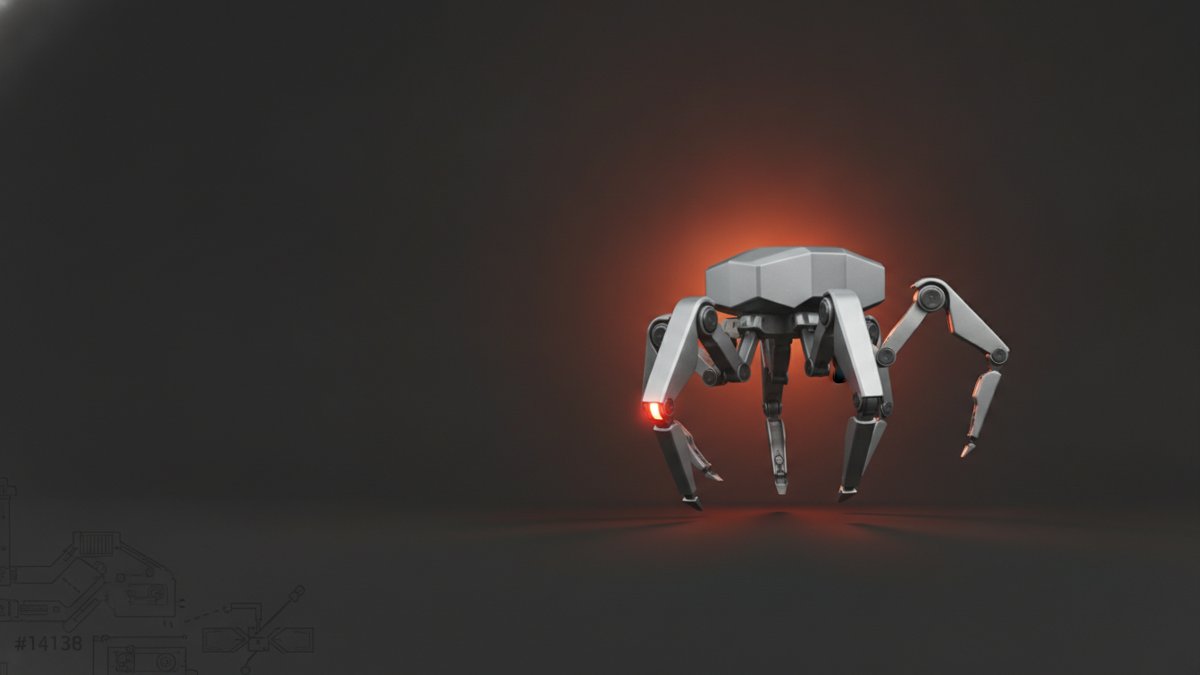
The Hexapod Robot Kit with Arduino Mega & 18 Servos (₹9,770) is the summit of our kit range: a six-legged walking robot with three degrees of freedom per leg, driven by eighteen MG90S servos coordinated through two PCA9685 PWM drivers, with an MPU6050 IMU feeding real-time terrain adaptation. This is an Advanced kit with an honest 15–18 hour build, and it demands — and rewards — everything at once: inverse kinematics, tripod gait sequencing, sensor fusion, soldering, and the power electronics needed to feed eighteen servos from a LiPo battery. It is priced and scoped as a capstone: the robot you build when wheeled platforms have stopped teaching you anything new, and the one that walks across your college tech fest on legs you programmed.
What's in the box
Arduino Mega 2560, eighteen MG90S servos, two PCA9685 16-channel servo drivers, MPU6050 IMU, a 7.4V 2S 3000mAh LiPo battery, an LM2596 buck converter, four 1000µF 25V capacitors plus fifteen 100nF capacitors, 4.7kΩ resistors, a full set of 3D-printed or acrylic leg parts, ninety bolts and nuts (60 M2, 30 M3), three PCB prototype boards, and a soldering iron with solder wire. Read that list as a syllabus: the buck converter and big capacitors exist because eighteen servos moving together create current spikes that will brown out a naive power design — and building the power system properly is part of the course. Every servo is tested before packing.
What you'll learn
- Inverse kinematics for legged robots — computing three joint angles per leg so a foot lands where the gait says it should, six times over, continuously.
- Tripod gait programming — sequencing legs in alternating triangles for statically stable walking, turning and reversing.
- Coordinating 18 channels over I2C — using PCA9685 drivers so the Mega commands all servos without running out of timers.
- IMU sensor fusion — blending accelerometer and gyroscope data to keep the body level on slopes and bumps.
- High-current power engineering — LiPo handling, buck conversion and bulk capacitance: the difference between a robot that walks and one that reboots mid-stride.
The build, honestly
Fifteen to eighteen hours is not padding. The mechanical phase alone — six identical legs, ninety fasteners — tests your patience and your consistency, and consistency is the trap: each leg must be assembled with its servos at the same neutral positions, or your kinematics math fights your hardware forever. Centre and mark every servo before assembly. The second classic trip-up is power: if legs twitch or the board resets when the robot stands, that's a current sag, and the fix is the buck converter and capacitors wired as designed, not thicker code. The stated prerequisites are real — comfort with Arduino C++ and soldering are expected, and this kit is a poor place to learn either from zero. What you get in exchange is the full legged-robotics stack, understood because you built every layer of it.
Who it's for — and who should skip it
Targeted at B.Tech ECE/EEE capstone projects, hackathon teams building novel ground vehicles, and college robotics clubs pushing into legged motion. If you've built wheeled robots, tuned a control loop, and want the project that ties mechanics, embedded code and power electronics together, this is it.
Skip it if this would be your first or second build — at this price, buying frustration is easy. The Gripper Arm Kit teaches multi-servo control for a fraction of the cost; the Ball Balancer PID Kit teaches the IMU-and-feedback half; our 4WD Arduino Robot Kit builds driving confidence. Come back when those feel easy — the hexapod will still be the best thing on the shelf.
FAQ
Do I need prior Arduino and soldering experience?
Yes. This is an advanced kit: comfort programming Arduino in C++ and soldering are expected. The AI companion helps throughout, but it assumes those foundations.
Can I customise the gait or add sensors?
Yes — the Mega's abundant I/O and the included prototype boards leave room for ultrasonic sensors, custom gait algorithms and extra feedback loops beyond the MPU6050.
What if a servo arrives defective?
Every servo is tested before packing; any manufacturing defect is replaced free within 7 days with your order number and a photo.
The kit arrives pre-loaded in Soldr, our AI build assistant, which generates the wiring, the gait firmware and stage-by-stage troubleshooting for this exact hexapod.